


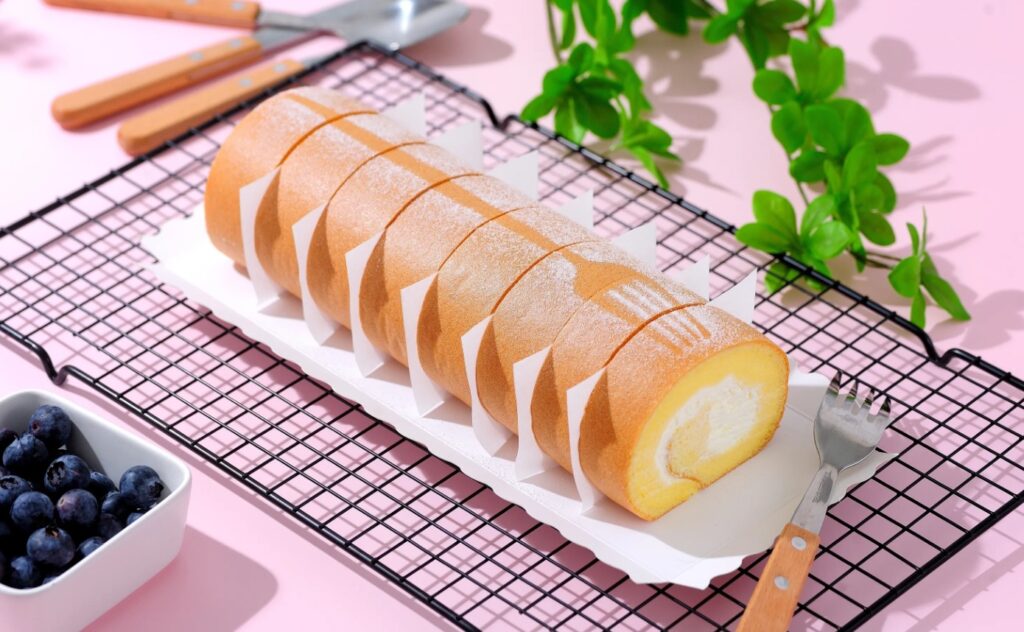
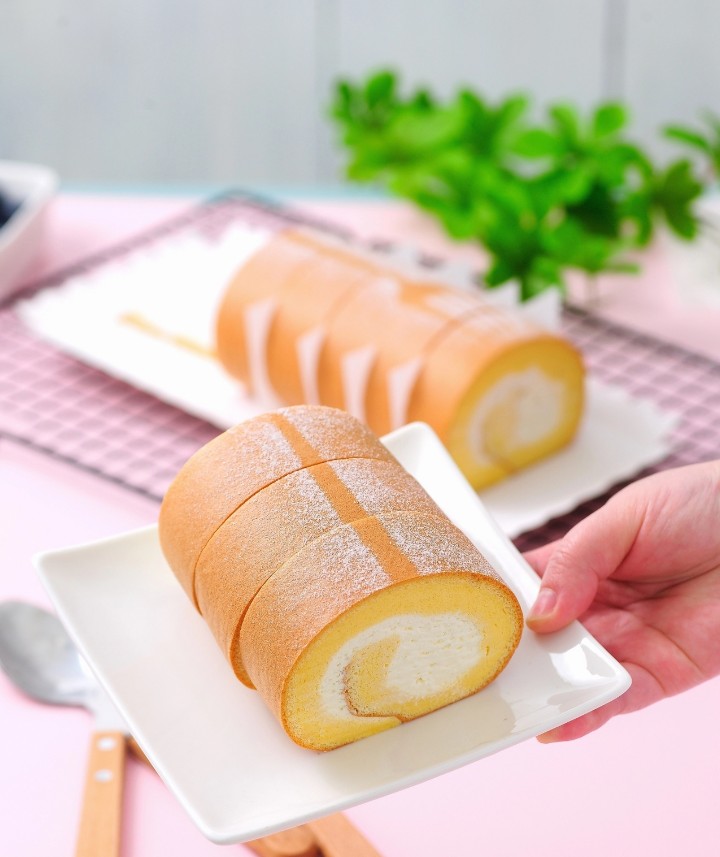
Vanilla roll cakes are beloved for their light, airy sponge, subtle vanilla aroma, and creamy filling. The texture is soft and moist, with just the right balance of sweetness, making them ideal for tea time, celebrations, or a delightful homemade treat.
Preheat your oven to 180°C (350°F), then line your jelly roll pan with parchment paper, ensuring it covers the base and slightly up the sides. Lightly grease the parchment (optional, but helps with easy release).
Proper lining ensures the delicate sponge lifts cleanly without sticking or tearing. Place eggs and sugar in a large bowl. Using a hand or stand mixer, beat on high speed for 6–8 minutes until the mixture becomes pale and thick or it triples in volume.

Add vanilla extract and a pinch of salt; gently mix to incorporate. This is the main leavening for the sponge. No baking powder is used — the air you beat in is what gives the cake its lightness and structure. Sift cake flour over the whipped egg mixture in two parts to ensure no lumps.
Gently fold the flour into the batter using a large spatula: Cut down through the centre, scrape along the bottom, lift and turn. Rotate the bowl as you fold for even mixing, and work slowly and gently to avoid deflating the batter.
Overmixing will knock out precious air and lead to a dense, flat cake. Proper folding keeps it airy. In a small bowl, whisk together the milk and vegetable oil (or melted butter). To avoid deflating the batter, scoop a small amount (2–3 tbsp) of your cake batter into the milk-oil mixture and stir until smooth (this is called tempering).
Then gently fold this back into the main batter. This step evenly distributes the fat and liquid without overwhelming the airy egg structure, keeping the sponge light but tender and moist. Pour batter into prepared jelly roll pan.
Use an offset spatula to spread evenly into all corners — it should be smooth and level. Gently tap the pan on the counter to release any large air bubbles and bake in a preheated oven for 12–15 minutes, until it is a light golden colour and the top springs back lightly when gently pressed.
Because the sponge is thin, it bakes quickly. Overbaking can dry it out and cause cracks when rolling. Once baked, immediately run a knife along the edges to loosen the cake from the sides.
Carefully invert the hot cake onto a clean kitchen towel lightly dusted with powdered sugar (prevents sticking). Peel off the parchment paper gently and while the cake is still warm, roll it up gently with the towel from the short end (this forms the cake’s “memory” and prevents cracks later).
Let the cake cool completely while rolled up. Rolling while warm makes it flexible. If you wait until it cools flat, it’s more likely to crack when you try to roll it later.
In a chilled bowl, whip cold heavy cream, powdered sugar, and vanilla extract until medium peaks form. Keep chilled until ready to use.
Carefully unroll the cooled cake and spread whipped cream evenly over the surface, leaving about a 1-inch (2.5 cm) border at the far edge (this prevents cream from oozing out when rolled). If you like, you can add sliced fresh strawberries or berries on top of the cream for a fruity variation.
Gently roll the cake back up, using the towel to help guide a tight, even roll. Wrap the assembled cake tightly in plastic wrap. Refrigerate at least 30 minutes to 1 hour before slicing — this helps the cream firm up and the cake set nicely.
Before serving, dust with powdered sugar for decoration and use a sharp knife, wiping between cuts, to get clean, neat slices.
That’s your detailed, step-by-step roadmap to mastering the perfect soft and light cheesecake — airy, smooth, and delicate with just the right balance of flavour and texture. Whether you’re baking for guests, family, or yourself, this cheesecake is guaranteed to impress.
Expert Tips and Troubleshooting:
- Room temperature eggs: Always use eggs at room temperature for better whipping volume.
- Gently fold: Avoid rough stirring when incorporating flour or oil/milk. Keep that air in!
- Pre-roll while warm: This is essential to avoid cracks later.
Make-Ahead and Storage:
- Make-ahead: Sponge can be baked and rolled (unfilled) 1 day ahead, wrapped tightly. Fill just before serving for freshest results.
- Short-term storage: Keep the assembled cake wrapped and refrigerated for up to 2 days.
- Long-term storage: Freeze tightly wrapped slices for up to 1 month; thaw overnight in the fridge.
Ingredients;
For the vanilla sponge cake:
- 4 large eggs (room temperature; very important for proper volume)
- 100g (½ cup) granulated sugar
- 1 tsp pure vanilla extract
- 90g (¾ cup) cake flour (or all-purpose flour sifted well)
- 2 tbsp milk (whole milk preferred, room temperature)
- 2 tbsp vegetable oil (neutral-flavoured, like canola or grapeseed) OR melted unsalted butter
- Pinch of fine salt
For the whipped cream filling:
- 200 ml (¾ cup plus 1 tbsp) heavy cream (chilled)
- 20g (2 tbsp) powdered sugar (adjust to taste)
- ½ tsp vanilla extract
- Optional: Powdered sugar for dusting, fresh berries for garnish.